If egusi soup is the star of the plate, fufu is what makes the whole meal work. Understanding why the two are served together, what fufu actually is, and how to eat the pairing properly will make a lot more sense of a dish that can otherwise look unfamiliar to anyone who didn't grow up eating it, and this is what this guide attempt to cover and clearly bring to light.
What Is Fufu "Swallow"?
Fufu is a soft, smooth, dough-like starch that's a foundational part of meals across West and Central Africa. It's traditionally made from fermented cassava.
The word "fufu" is oftentimes used specifically to mean the cassava-based version, however, many food bloggers now use it to describe all other types such as poundo yam, plantain fufu, etc. Either way, its role at the table is consistent, it's a neutral-flavoured, filling base designed to be paired with a flavourful, often spicy soup or stew and its never eaten on its own.
How to Make Fermented Fufu in 6 Simple Steps
Fresh cassava is peeled and soaked in water for a few days (usually one to three days) to ferment.
Ground or blend the softened, fermented cassava.
Transfer into a muslin bag to remove any residual water.
Boil some water in a pot, add the dried cassava flour from the muslin bag to the boiling water and stir until it thickens.
Your Fufu is now ready to serve.
What is Egusi Soup
Egusi soup is a popular West African soup, often associated with Nigerian cuisine. It is made primarily from ground egusi (melon) seeds, which give the soup its distinctive nutty flavour and thick, creamy texture.
It is commonly prepared with palm oil (or vegetable oil depending on your preference), meat (beef, chicken, goat or lamb or mutton, etc) or fish, peppers, onions, crayfish, and leafy vegetables such as ugu (fluted pumpkin leaves), spinach, or bitterleaf. Other common proteins and ingredients you may taste in a classic Nigeria Egusi soup are stockfish, and snail.
Top-down Nigerian Egusi Soup Ingredients
Before we dive into how to make egusi soup, here are the ingredients you want to purchase.
2 cups ground egusi (melon seeds).
Meat, chicken, or assorted meat (goat, lamb, mutton meat etc).
300–500 g stockfish or dried fish (optional).
2–3 cups spinach, ugu, or bitterleaf, chopped.
2-6 onions (4 white or yellow, and 2 red or pink onions).
2–4 Scotch bonnet peppers, to taste.
2-4 bell or shepherd pepper (I recommend shepherd pepper because if it tastier)
½–1 cup palm oil.
2–3 tablespoons ground crayfish.
2–3 cups meat stock or water.
1–2 seasoning cubes, optional.
500g of African locust bean (optional).
Salt to taste
How to Make Make Egusi Soup
We understand you may be apprehensive about making a Nigeria egusi soup, especially if it's your first time making the soup. To this end, we have simplified this by creating a step by step approach to making this popular soup.
We assure you that, if you follow this guide stepwise, you'll come out on top with a tasty Nigerian egusi soup.
Cook the meat: Season the meat (whether it is beef or assorted meat) with your white or yellow onion, salt, and seasoning. Slow cook for about 15 minutes before adding water until it tender. Keep the stock for later.
Prepare the egusi: Mix the ground egusi with a little water to form a thick paste. You can also add finely chopped onion or pepper to the mixture.
Heat the palm oil: Add palm oil to a pot over medium heat. Don't let it smoke heavily.
Add more onions: Add chopped onions (I recommend yellow onions) to the oil to build a some flavour. Do not let the onion burn, just roast it for a minute or two.
Cook the egusi: Add the egusi mixture to the heated palm oil and onion and stir. Allow it to cook for several minutes, stirring occasionally. It will begin to form small curds.
Add stock: Gradually add the meat stock while stirring. Cover and simmer for about 10–15 minutes.
Add protein and seasoning: Add the cooked meat, crayfish, pepper, stockfish/dried fish, and additional seasoning (and locust beans if you want). Simmer for another 10 minutes.
Add vegetables: Stir in your chopped spinach, ugu, or bitterleaf. Cook for about 3–5 minutes so the vegetables retain some freshness.
Taste and serve: Adjust salt and pepper as needed.
Serve with: pounded yam, eba, fufu, amala, semolina, or rice.
Why Fufu and Egusi are Often Served Together
The pairing reflects a broader structure common across West African cuisine, where meals are typically built around a starchy "swallow" paired with a soup or stew, rather than the rice-and-side or bread-and-plate structures more familiar in Western meals.
Egusi soup, with its thick, rich, palm-oil base and generous mix of protein and greens, is intentionally hearty and substantial, thick enough that it needs something to scoop it up with rather than being eaten with a spoon. Fufu's smooth, slightly stretchy texture is purpose-built for exactly that as it holds together well enough to pinch off and shape, but stays soft enough to easily absorb and carry the soup with it in each bite.
There's also a textural balance at play. Fufu itself has almost no flavour of its own, its job isn't to compete with the soup but to carry it, the same functional role rice plays with a curry or bread plays with a stew in other culinary traditions. The soup provides all the seasoning, heat, and richness; the fufu provides the neutral, filling counterpoint.
How to Eat Fufu and Egusi
If you've never eaten with fufu before, the technique is simple once you know it, even if it feels unfamiliar at first.
Wash your hands. Fufu and egusi are traditionally eaten entirely by hand, using the right hand in most West African customs.
Pinch off a small piece of fufu, roughly a tablespoon-sized portion is a good starting point.
Roll and press it lightly between your fingers and thumb to soften it slightly and create a small indent or scoop shape.
Use the fufu to scoop a portion of soup and protein, pressing it just enough to pick up a mouthful of the egusi soup, meat, or fish.
Swallow, don't chew, this is the detail most newcomers find surprising. Traditionally, fufu is swallowed in small bites rather than chewed extensively, which is part of where the "swallow" name for this category of food comes from. That said, there's no strict rule here and you can eat however feels comfortable.
If eating by hand isn't your preference, a fork and spoon work perfectly well too. The hand-eating tradition is cultural and practical rather than mandatory, and plenty of people, including in Nigeria, eat fufu and egusi with utensils depending on setting and personal preference.
Other Popular Foods Pairing With Egusi
Not all fufu is the same, and the type you choose changes both the texture and the flavour balance of the meal.
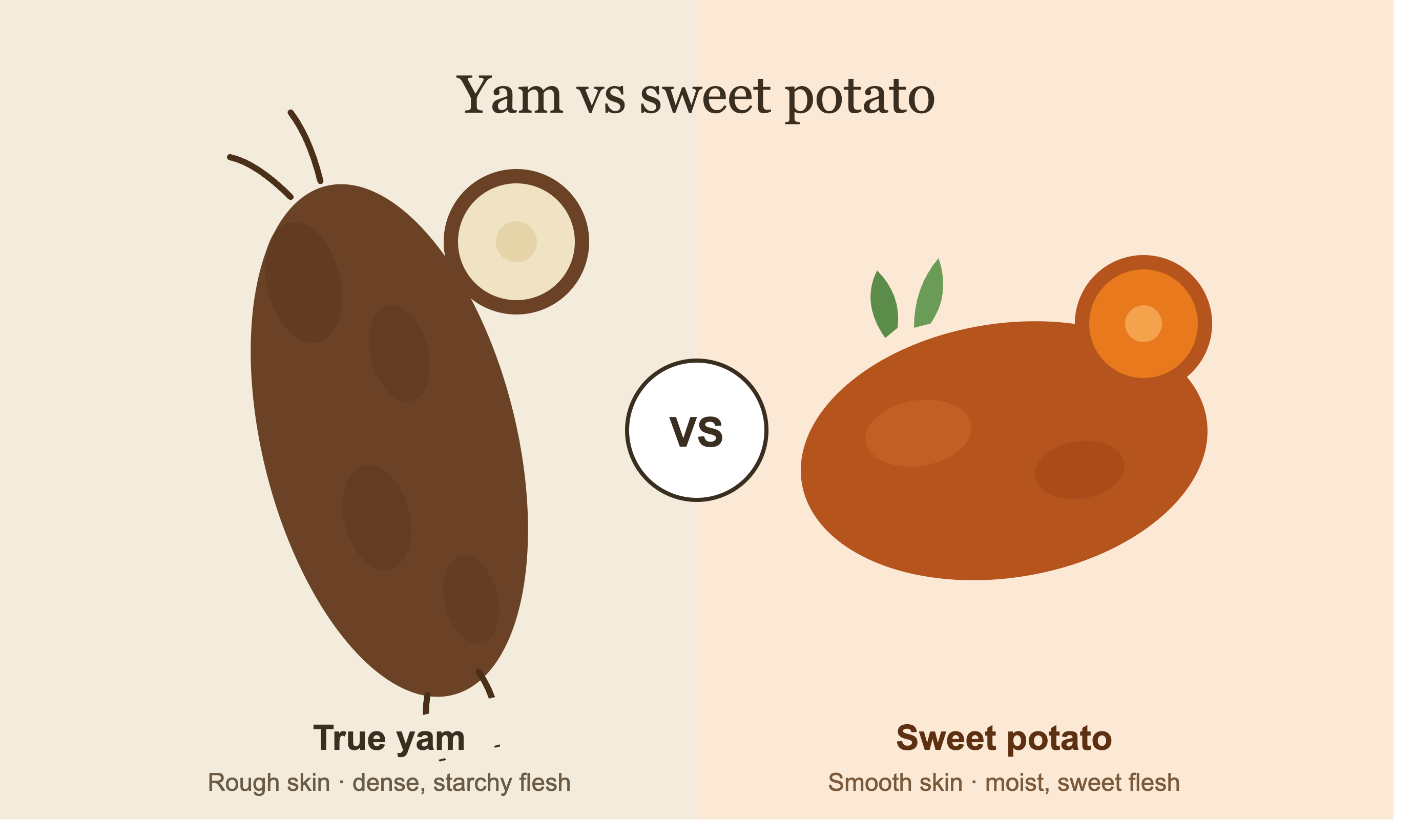
Pounded yam: Made from boiled and pounded white yam, pounded yam has a smooth, elastic, slightly stretchy texture and a mild, faintly sweet flavour. It's widely considered one of the most classic pairings for egusi soup and is often the version served for special occasions.
Cassava fufu (fermented fufu): Made from fermented cassava, this version carries a subtle tang that contrasts nicely with the richness of egusi soup. It has a smoother, slightly more elastic texture than pounded yam.
Garri (eba): Made from dried, granulated cassava mixed with hot water, garri is quicker and easier to prepare than pounded yam or fermented fufu, making it a common weeknight choice. Its texture is slightly grainier and less smooth than true pounded fufu.
Semovita and amala: Semovita is made from wheat, while amala is made from yam flour (or occasionally cassava or plantain flour), both are common alternatives depending on regional and personal preference, with amala in particular carrying a distinctive dark color and slightly earthy flavor.
Plantain fufu: Less common than the cassava or yam versions, but found in some regional and diaspora kitchens, offering a slightly sweeter base than traditional pounded yam.
Each of these pairs well with egusi soup, the choice usually comes down to regional tradition, what's available, and personal preference for texture (smooth and stretchy vs. grainier and quicker to prepare).
Making Fufu at Home
For anyone cooking fufu and egusi for the first time, the fastest and most consistent route is instant fufu flour, pre-processed cassava, yam, or plantain flour that only needs to be mixed with hot water and stirred until smooth, usually taking under 10 minutes. Traditional pounded fufu, made from boiling and hand-pounding fresh yam or cassava, takes considerably longer and requires more physical effort, but many people who grew up with it prefer the texture it produces.
Basic steps for instant fufu flour:
Bring water to a boil.
Gradually whisk in the fufu flour, stirring continuously to avoid lumps.
Continue stirring and adding flour or water as needed until the mixture reaches a smooth, stretchy, dough-like consistency.
Shape into rounded portions and serve warm alongside the soup.
Fufu is best served fresh and warm, it firms up and becomes less pliable as it cools, so it's typically made just before serving rather than prepared far in advance.
A Note on Cultural Context
Fufu and egusi isn't just a flavour combination but reflects a deeper structure in how meals are built and shared across much of West Africa. Meals centered on a swallow and soup are often eaten communally, sometimes from a shared bowl, and the pairing carries genuine cultural weight beyond its role as "dinner." Approaching it with that context, rather than treating fufu as simply a bread substitute goes a long way toward understanding why this particular combination has remained a staple across generations and, increasingly, across the diaspora.
Where to Buy Fufu and Egusi Ingredients
Fufu flour, whether cassava, yam, or plantain-based, along with egusi, palm oil, and the other ingredients that go into a proper pot of egusi soup, are best sourced from a dedicated African or Nigerian grocer rather than a general supermarket. MamiMarkets connects you with vendors across Winnipeg, Edmonton, Toronto, and Kingston carrying authentic fufu flour and egusi soup ingredients, so you can put this pairing together at home without hunting across multiple stores.
Frequently Asked Questions
What is fufu made of? Fufu is typically made from cassava, yam, or plantain boiled and then pounded or mixed into a smooth, dough-like consistency. Instant fufu flour versions of all three are widely available for quicker home preparation.
Can you eat egusi soup without fufu? Yes, egusi soup can be eaten with rice or on its own, though pairing it with a swallow like fufu, pounded yam, or garri is the traditional and most common way it's served.
Is fufu gluten-free? Cassava, yam, and plantain-based fufu are naturally gluten-free. Semovita, made from wheat, is not, check the specific flour if gluten is a concern.
What's the difference between fufu and garri? Garri or eba is from dried, granulated cassava flour mixed with hot water, while "fufu" more broadly can refer to pounded yam, fermented cassava fufu, or plantain fufu, depending on regional usage. Garri is generally faster to prepare and has a slightly grainier texture than pounded or fermented fufu.
How long does fufu last once made? Fresh fufu is best eaten the same day, as it firms up and loses its soft, pliable texture as it cools. Leftover fufu can be refrigerated and gently reheated with a splash of water, though the texture won't fully match freshly made fufu.