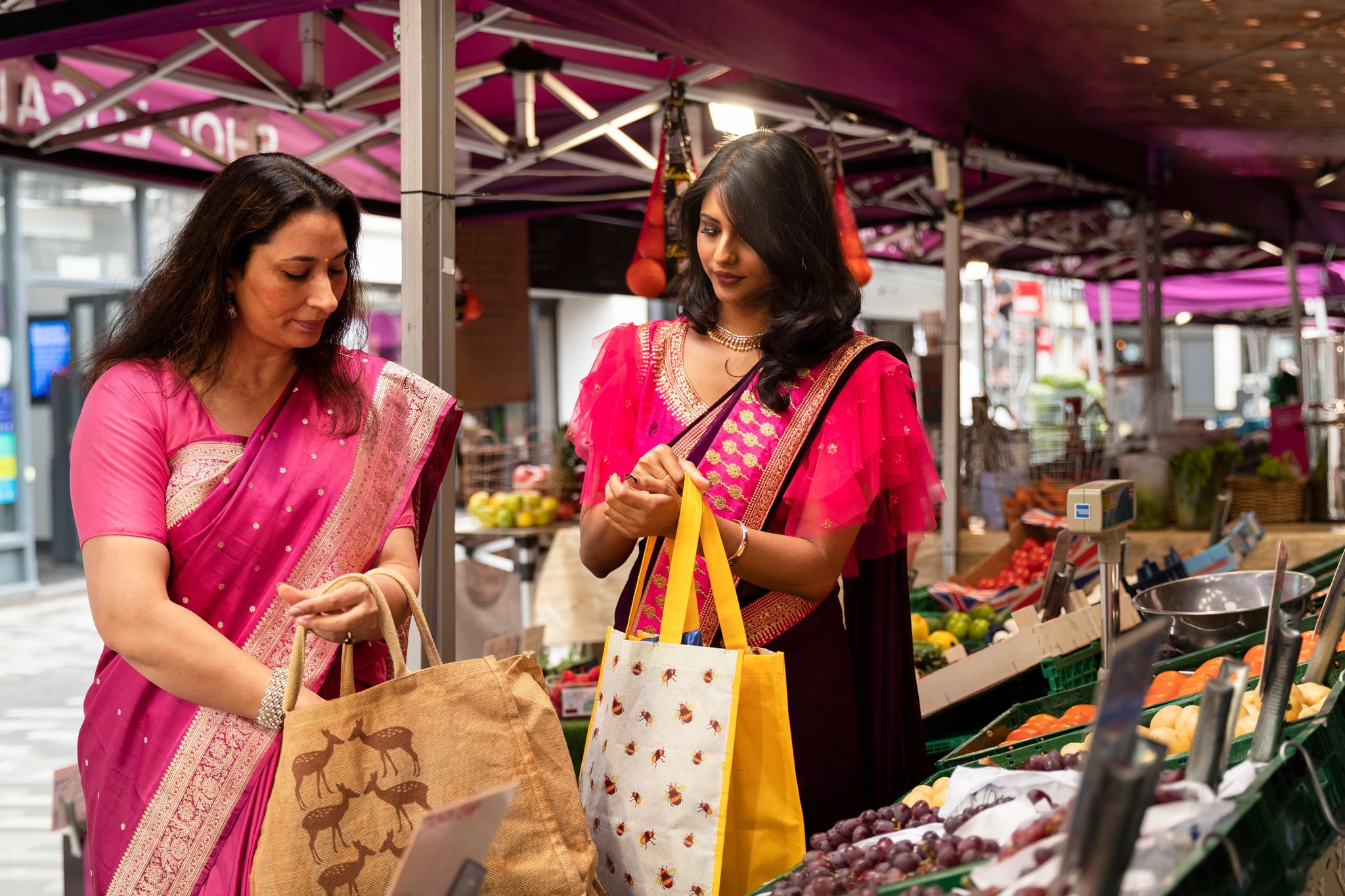
If you've just discovered your local Indian grocery store or you're about to visit one for the first time, welcome to one of the most rewarding shopping experiences out there. Indian grocery stores carry an incredible range of products, and walking in without a plan can feel a little overwhelming.
This guide breaks down exactly what to buy at an Indian grocery store, whether you're building your pantry from scratch, cooking Indian food for the first time, or just looking to stock up on things that are cheaper and better quality than what you'll find at a mainstream supermarket.
We've organised this into categories so you can work through it systematically. Bookmark it, screenshot it, or print it out, this is the shopping list you'll come back to.
1. Spices
Spices are the single best reason to shop at an Indian grocery store. You'll get dramatically better value than buying small jars at a regular supermarket, and the quality is often higher too because the stock turns over quickly.
Here are the spices every home cook should pick up:
- Turmeric (haldi): the golden spice. Anti-inflammatory, earthy, and used in almost everything. Buy a 200g bag.
- Cumin seeds (jeera): for tempering (tadka) at the start of almost every dish. Buy whole seeds and ground.
- Coriander powder (dhania): mild, citrusy, and used in huge quantities. Buy a 200–500g bag.
- Red chili powder, buy two: Kashmiri red chili (mild, deeply coloured) and a hot variety for heat.
- Garam masala: the signature finishing spice blend. Everest and MDH are the most trusted brands.
- Mustard seeds (rai): essential for South Indian cooking and tempering.
- Asafoetida (hing): small pinch, enormous flavour. Essential for dal and vegetarian dishes.
- Fenugreek seeds (methi dana): slightly bitter, used in dals and pickles.
- Cardamom (elaichi): green pods for sweets and chai, black pods for biryanis.
- Cloves, cinnamon, and bay leaves: the aromatic trio for rice dishes and curries.
💡 Pro Tip: Buy spices in 200–500g quantities. Whole spices last 2–3 years stored in a cool dark place. Ground spices last 12–18 months. You'll use them faster than you think.
2. Rice
Mainstream supermarkets usually carry one or two types of basmati. Indian grocery stores carry dozens different brands, different ages, different grain lengths. Here's how to navigate the rice aisle:
- Aged Basmati: the gold standard for biryani and pilau. Look for rice aged 1–2 years minimum. Tilda, India Gate, and Daawat are reliable brands. The 5kg bag is the sweet spot for most households.
- Sona Masoori: a lighter, softer everyday rice popular in South India. Great for regular meals when you don't want basmati's strong aroma.
- Idli rice: short-grain, high-starch rice used for fermenting idli and dosa batter. Only buy this if you plan to make idlis at home.
- Poha (beaten rice): flat, partially cooked rice flakes. Used for the popular breakfast dish poha, but also as a quick snack base.
- Puffed rice (murmura): used in bhel puri and other street food snacks.
💡 How much to buy: A 5kg bag of basmati is ideal for most families cooking Indian food 2–3 times a week. If you cook rice daily, the 10kg bag is significantly better value.
3. Lentils and Pulses
If spices are the soul of Indian cooking, lentils are the body. Indian cuisine uses an enormous variety of dals, each with its own flavour, texture, and best uses. Here's what to get started with:
- Masoor dal (red lentil): the most beginner-friendly dal. No soaking needed, cooks in 20 minutes, makes a silky, comforting soup. Buy a 1–2kg bag.
- Toor dal (yellow pigeon pea): the most widely used dal in India. The base of sambar and the classic everyday dal in most South and West Indian households.
- Chana dal (split chickpea): nutty, slightly sweet, and used in dals, rice dishes, and as a coating in savoury snacks.
- Urad dal (black lentil) available whole (black) or split (white). Used in dal makhani, idli/dosa batter, and as a tempering element.
- Moong dal (mung bean): available whole (green), split with skin (chilka moong), or split and skinned (yellow moong). Very digestible and mild. Great for khichdi.
- Chana (whole chickpeas): larger than canned chickpeas from mainstream stores. Soak overnight and pressure cook for the best chole (chickpea curry).
- Rajma (kidney beans): the base of the beloved North Indian dish rajma chawal. Again, dried beats canned for flavour.
💡 Money Saver: Buying dried dal is far cheaper than canned legumes and the flavour is noticeably better. A 2kg bag of toor dal costs less than four cans of lentil soup and makes far more food.
4. Flours
Indian cooking uses a wide range of flours, and an Indian grocery store is the only place you'll find all of them in one place.
- Atta (whole wheat flour): used for roti, chapati, and paratha. Aashirvaad and Shakti Bhog are the most popular brands. Finely milled stone-ground atta makes the softest rotis.
- Besan (chickpea flour): used for pakoras, kadhi, and gram flour flatbreads. High in protein and gluten-free.
- Rice flour: essential for making crispy dosas, kozhukattai, and South Indian sweets.
- Semolina (sooji/rava): used in upma, halwa, and as a coating for fried foods.
- Maida (refined flour): similar to plain white flour but milled finer. Used in naan, paratha, and Indian sweets.
5. Oils, Ghee, and Fats
- Mustard oil: pungent raw, but deeply savoury when heated. Essential for Bengali and North Indian cooking.
- Coconut oil: cold-pressed for South Indian cooking and Ayurvedic use.
- Pure desi ghee: clarified butter with a nutty, rich flavour. Used in dal, biryani, and sweets. Amul ghee is the most recognisable brand.
- Sesame oil (gingelly oil): used in South Indian pickles and as a finishing oil.
💡 Worth Knowing: Indian grocery stores sell ghee in significantly larger quantities and at better prices than mainstream stores. A 1-litre tin of Amul ghee from an Indian grocery store typically costs a fraction of the equivalent quantity from a regular supermarket.
6. Condiments, Pickles, and Chutneys
This is one of the most exciting aisles in any Indian supermarket. Indian pickles (achar) are made differently from Western pickles, they're oil-based, highly spiced, and intense. A small amount goes a long way.
- Mango pickle (aam ka achar): the most iconic Indian pickle. Pairs with dal-rice, paratha, and curd rice.
- Lime/lemon pickle: tart, spicy, and completely addictive.
- Garlic pickle: for those who like bold flavours.
- Priya and Mother's Recipe are reliable mainstream brands. Regional brands (e.g. Gongura pickle from Andhra Pradesh) are worth seeking out.
- Tamarind paste or block: essential for chutneys, sambar, and rasam. Buy the concentrated paste for convenience or the block for a more authentic flavour.
- Green chili sauce: not the same as Tabasco. Indian-style chili sauces are thicker and less vinegary.
7. Snacks
Indian savoury snacks are some of the most complex and satisfying snacks in the world. Here's a starter list:
- Bhujia: fine, crispy sev made with chickpea flour. Haldiram's Aloo Bhujia is a national obsession.
- Chakli: spiral-shaped, crunchy snack made from rice flour.
- Murukku: a South Indian crispy snack made from urad dal and rice flour.
- Mathri: flaky, savoury biscuits, great with pickle and chai.
- Chivda: a spiced mix of flattened rice, peanuts, and dried fruits. Highly snackable.
- Pappad/papadum: thin lentil wafers. Fry or microwave for 30 seconds. A great side dish.
💡 First-time buyer tip: Pick up two or three different snack bags and have a tasting session at home before committing to larger quantities. Indian snacks vary enormously in flavour and heat level.
8. Dairy and Refrigerated Items
- Paneer: fresh Indian cheese. Used in palak paneer, paneer tikka, and hundreds of other dishes. Look for fresh paneer in the refrigerated section.
- Lassi: yoghurt-based drink available in mango, rose, and plain varieties.
- Kefir / cultured yoghurt: often sold in large tubs at good value.
- Dahi (yoghurt): Indian-style full-fat yoghurt, used in curries, marinades, and as a side.
9. Frozen Foods
Indian frozen food has improved enormously. These are worth picking up:
- Frozen paratha: Kawan and Hindustan brands make excellent layered parathas. Cook in 3 minutes.
- Frozen samosas: great for last-minute guests or a quick snack.
- MTR Ready-to-Eat pouches: genuinely good quality ready meals. Dal makhani, palak paneer, and chole are all worth having in the freezer.
- Frozen dosas: not quite homemade quality but very convenient.
10. Beverages and Chai
- Loose-leaf chai: Wagh Bakri, Society Tea, and Brooke Bond are beloved brands. Indian chai brewed with loose leaf tea is incomparably better than tea bags.
- Instant mixes: filter coffee mixes for South Indian-style coffee, masala chai mixes.
- Rooh Afza: a rose-based syrup that makes a refreshing cold drink, especially in summer.
- Nimbu pani mix: lemon-based drink concentrate.
- Thandai mix: a rich, spiced almond drink popular at Holi.
Where to Find These Products?
If you're in Winnipeg, you can browse Indian grocery stores stocking all of these products at find Indian grocery stores near you on MamiMarkets. You'll find stores organised by neighbourhood and product availability, making it easy to find exactly what you need.
Frequently Asked Questions
How much should I budget for building an Indian pantry from scratch?
A solid starter Indian pantry — covering the key spices, a couple of dals, atta, rice, and a few condiments — will cost roughly $80–$120 Canadian. Once the pantry is built, weekly top-ups are usually much cheaper.
Are Indian grocery stores cheaper than mainstream supermarkets?
For spices, lentils, rice, and flour, yes — often significantly cheaper. For fresh produce the difference varies. As a general rule, anything that's a staple of Indian cooking will be better value at an Indian grocery store.
What brands should I look out for?
For spices: MDH, Everest, Eastern. For rice: Tilda, India Gate, Daawat. For atta: Aashirvaad, Shakti Bhog. For ghee: Amul. For snacks: Haldiram's. For ready-to-eat: MTR.