Why This Mix-Up Happens
If you've ever stood in a grocery store aisle staring at two orange tubers labeled "yam," you're not imagining the confusion it's built into the system. In North America, sweet potatoes with darker skin and orange flesh have been marketed as "yams" since the 1930s, when Louisiana farmers used the label to distinguish their moist, orange sweet potato variety from the drier, paler ones already on the market. Regulators eventually stepped in, and today any package labeled "yam" is legally required to also say "sweet potato" right on it which is why most people who've bought a "yam" at the supermarket have actually never eaten a true one.
True yams: the tubers eaten daily across Nigeria, Ghana, and much of West Africa are a completely different plant family, and once you've seen one side by side with a sweet potato, you'll never confuse them again.
Yam vs Sweet Potato: The Core Differences
True Yam (Dioscorea) | Sweet Potato (Ipomoea batatas) | |
|---|---|---|
Plant family | Dioscoreaceae | Convolvulaceae (morning glory family) |
Native to | West Africa and Southeast Asia | Central and South America |
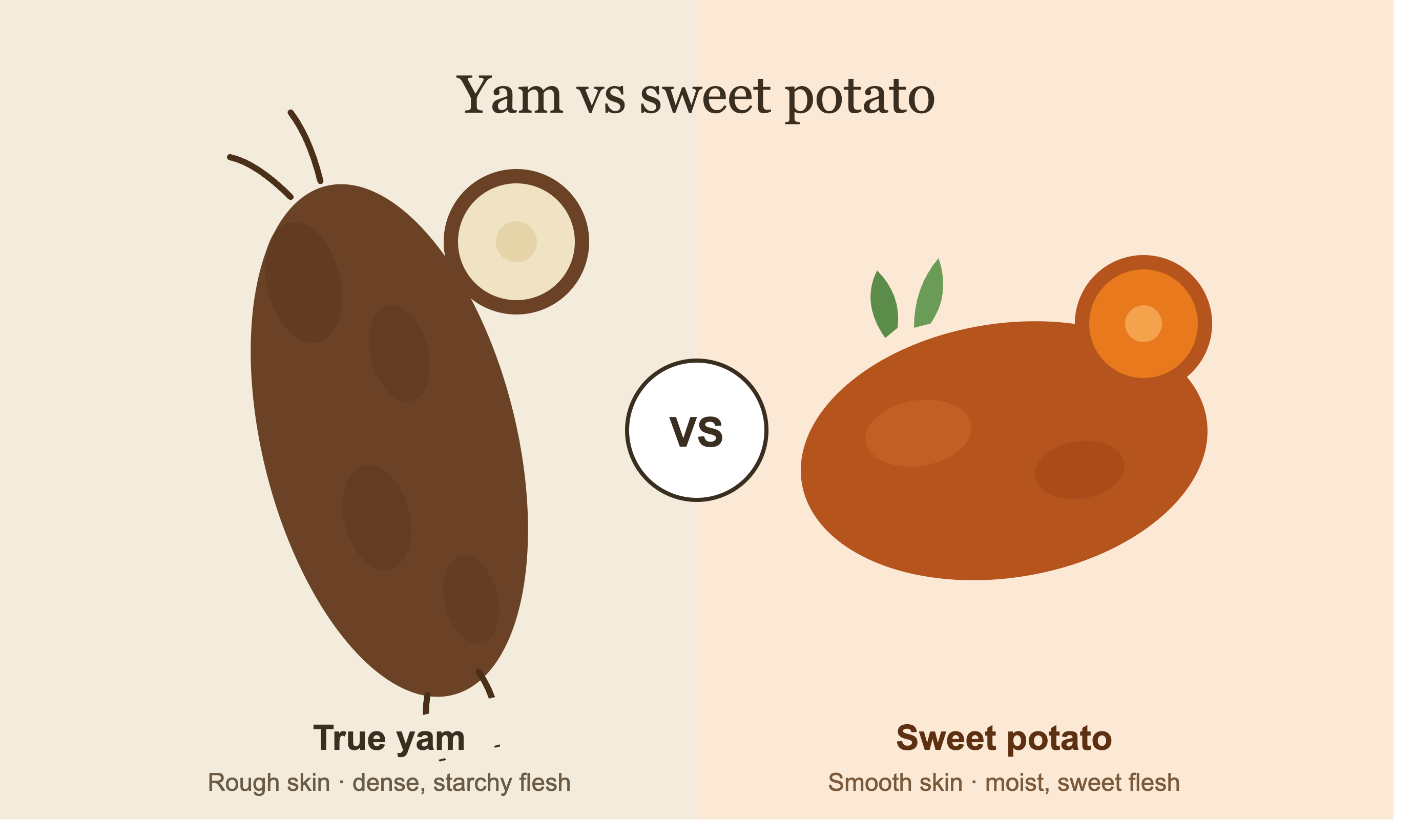
Skin | Rough, brown, bark-like | Smooth, thin, red-orange to purple |
Flesh | Off-white to purple, dry, starchy | Orange, yellow, or purple, moist, sweet |
Taste | Mild, starchy, savory | Naturally sweet, caramelizes when roasted |
Size | Can grow several feet long | Typically hand-sized |
Where sold in Canada | African and Caribbean grocers (like MamiMarkets) | Most mainstream grocery stores |
Nutrition, Side by Side
Per 100g cooked, without salt:
Nutrient | True Yam | Sweet Potato |
|---|---|---|
Calories | ~116 | ~90 |
Carbohydrates | Higher | Lower |
Fiber | ~11% DV | ~14% DV |
Potassium | ~955mg (nearly 3x more) | ~542mg |
Vitamin A | Virtually none | 375%+ DV |
Vitamin C | Higher | Higher |
Sweet potatoes get their deep orange colour and most of their nutritional reputation from beta-carotene, which the body converts into vitamin A; a single cooked cup covers well over a full day's requirement. Yams don't offer meaningful vitamin A, but they carry nearly three times the potassium of sweet potatoes, along with more manganese, making them a genuinely different nutritional tool rather than a "lesser" version of sweet potato.
Bottom line: if you're eating for beta-carotene and vitamin A, sweet potato wins. If you want a low-glycemic-index staple carb rich in potassium and resistant starch the way yam has been used as a dietary staple across West Africa for centuries, true yam is the better fit. Neither is "healthier" in absolute terms; they serve different roles on the plate.
Source: USDA FoodData Central
Taste, Texture, and How Each Is Actually Cooked
This is where the confusion really costs people flavor. Sweet potato is bred for sweetness — it caramelizes beautifully when roasted and is the backbone of dishes like candied sweet potatoes, sweet potato pie, and fries.
True yam is starchy, not sweet, and is treated more like a savory staple than a vegetable side. Across West Africa, it's most commonly:
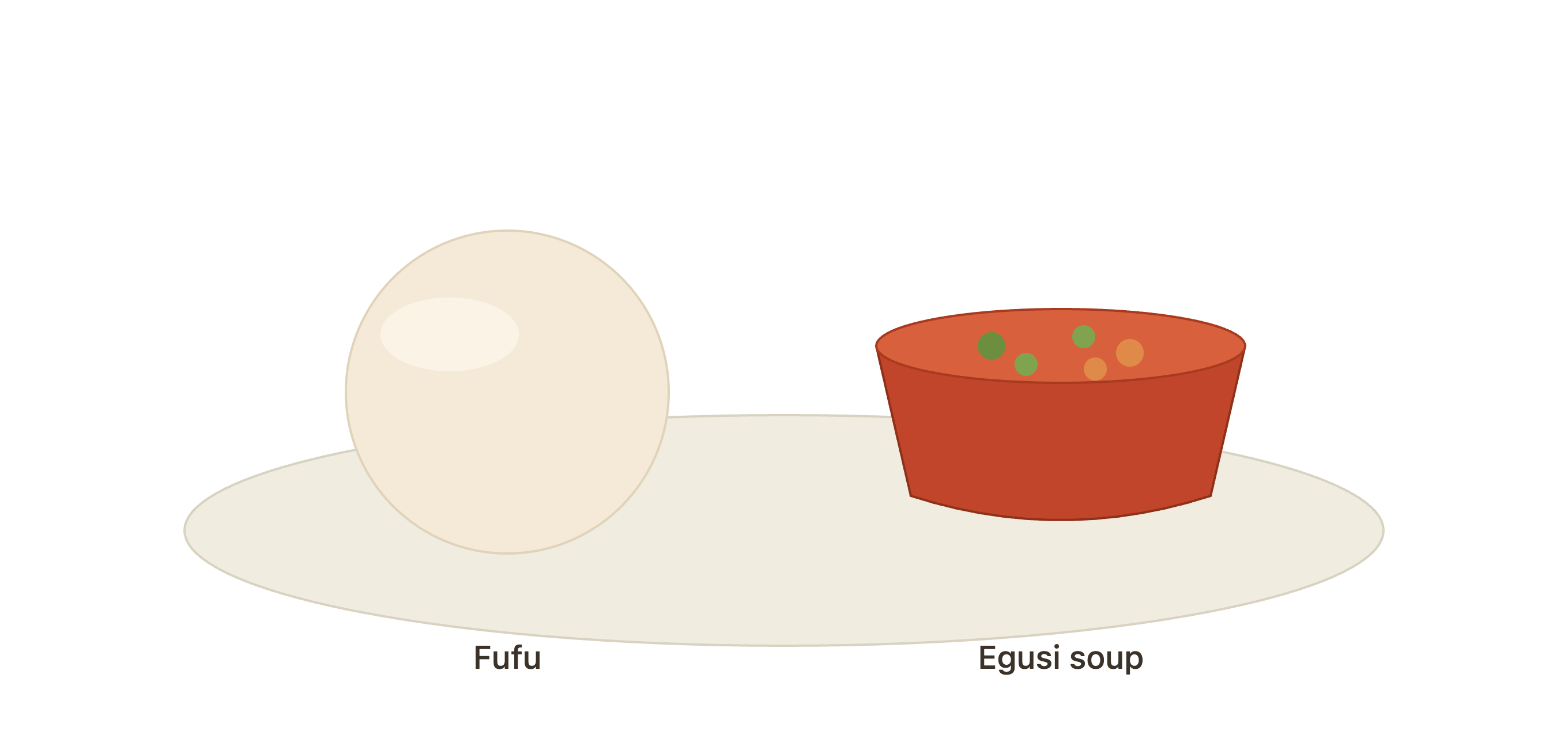
Boiled and pounded into pounded yam — a smooth, stretchy "swallow" eaten with soups like egusi or ogbono
Boiled and served whole with a fried-egg or stew sauce for breakfast
Fried into thick, crisp yam chips
Roasted over open flame as street food (asun-style)
If you try to cook a true yam the way you'd cook a sweet potato or vice versa the texture will disappoint you. Yam needs longer boiling and doesn't caramelize the same way; sweet potato turns mushy if you try to pound it. Knowing which one you're holding matters before you even turn on the stove.
Where to Buy True African Yam in Canada
Because true yam isn't grown commercially in Canada and doesn't fit the "yam" labeling most Canadian grocery chains use, it's genuinely hard to find outside African and Caribbean grocers and even then, freshness and variety (white yam vs. water yam vs. puna yam) vary a lot store to store.
This is exactly the gap MamiMarkets was built to close. Shop true African yam on MamiMarkets and get it delivered alongside everything else you'd need to cook it properly from palm oil to stockfish for the soup you're pairing it with. If you're new to cooking with yam, our pounded yam recipe guide walks through boiling time, pounding technique, and common mistakes first-timers make.
Browse yam and other West African staples →
Frequently Asked Questions
Is yam the same as sweet potato?
No. They're different plants from different families, native to different continents. What's labeled "yam" in most Canadian and American grocery stores is actually a variety of sweet potato true yam is a separate, starchier tuber typically sold at African or Caribbean grocers.
Which is healthier, yam or sweet potato?
Neither is universally healthier, they're nutritionally different. Sweet potato is much higher in vitamin A (beta-carotene) and slightly lower in calories. True yam has more potassium, more fibre by some measures, and a lower glycemic index, making it a common staple carb in traditional diets.
Can I substitute sweet potato for yam in a recipe?
Not for African dishes like pounded yam, the texture and starch content are too different, and the result won't hold together the way pounded yam should. For most other recipes (roasting, mashing as a side), they can be swapped, though sweet potato will taste noticeably sweeter.
Where can I buy real African yam in Canada?
True African yam is sold at African and Caribbean grocery stores and online retailers like MamiMarkets, which ships across Canada. Mainstream grocery chains almost always carry sweet potato labeled as "yam" instead.
Why does the US and Canada call sweet potatoes "yams"?
The habit dates back to the 1930s, when U.S. producers used "yam" to distinguish moist, orange-fleshed sweet potatoes from drier varieties already on shelves. The name stuck, and labeling rules now require "sweet potato" to also appear on the package — but the "yam" name never went away.
About the Author
MamiMarkets is a Canadian multi-vendor grocery platform connecting diaspora shoppers with African and South Asian vendors across six cities. We work directly with vetted vendors to source authentic, hard-to-find staples from true African yam to South Asian pantry essentials and get them to doorsteps across Canada. This guide draws on our ongoing work sourcing and researching ingredients alongside the vendors and shoppers who know them best.